
Brut
Predominantly Meunier, alongside Pinot Noir and Chardonnay. A fresh, approachable, and versatile expression. Also available by the glass.
One region. Infinite expressions.
The Maisons
Every maison has a history, a style, and its own way of expressing its origin. At Bulles we bring together a carefully chosen selection of houses and labels to explore the diversity of Champagne, from its great classics to its most exceptional cuvées.
Get to know their stories. Discover their labels. Find your Champagne.
A new generation of Champagne.
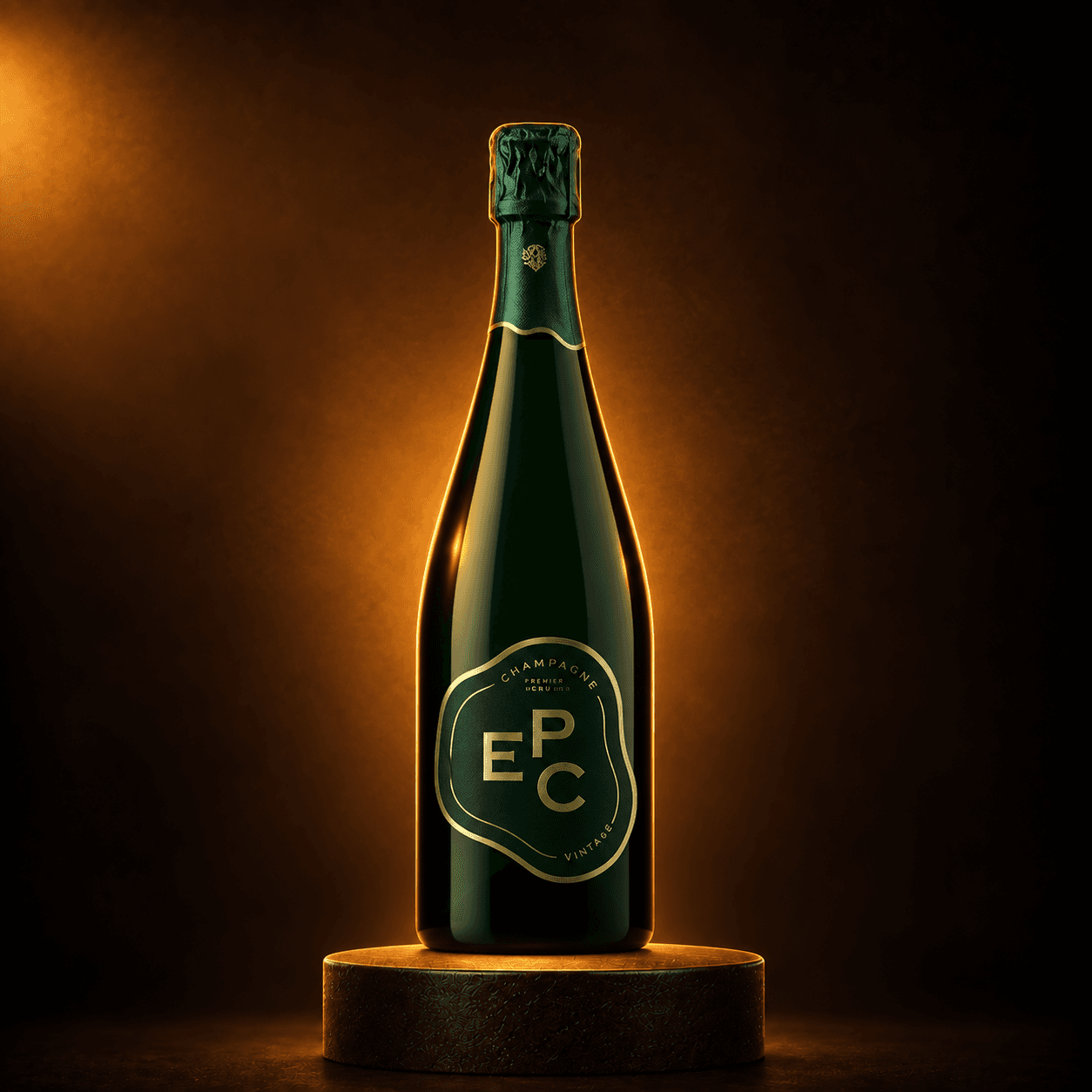
EPC represents a more contemporary take on Champagne. A young maison that sets out to approach its universe in a more transparent, direct, and unpretentious way, spotlighting the origin of the grapes, the growers, and each cuvée's identity.
A philosophy especially close to Bulles: know more so you can choose freely, and enjoy Champagne without solemnity.
Predominantly Meunier, alongside Pinot Noir and Chardonnay. A fresh, approachable, and versatile expression. Also available by the glass.

Made exclusively with Chardonnay. Freshness, delicacy, and a more vertical, luminous expression.

An interpretation made exclusively from Champagne's red varieties, with greater structure, character, and depth.
Elegance, freshness, and Chardonnay.
One of Champagne's great historic maisons, Taittinger stands out for the leading role of Chardonnay in its style: freshness, delicacy, and elegance that run through its different cuvées.

Balanced, fresh, and elegant. An emblematic expression of the maison and an excellent way to discover its style.

Vibrant and expressive, combining fruit, freshness, and structure in a highly versatile Champagne.

Made exclusively with Chardonnay and Pinot Noir from Grand Cru vineyards. Precise, mineral, and deeper.

Made from a single selected harvest. A Champagne with greater structure, complexity, and aging potential.

Taittinger's great prestige cuvée. Made exclusively with Grand Cru Chardonnay from the Côte des Blancs, it's one of the maison's finest expressions of elegance and refinement.
Boldness, character, and Pinot Noir.
The story of Veuve Clicquot is marked by an extraordinary woman: Madame Clicquot, who took the reins of the maison in the early 19th century and left a decisive mark on Champagne's history.
With Pinot Noir at the heart of its identity, the maison builds Champagnes known for their structure, intensity, and personality.

The maison's emblematic cuvée. Balanced, expressive, and structured, it captures Veuve Clicquot's signature style. Also available by the glass.

Ripe red fruit, freshness, and structure. A vibrant expression that reflects the maison's distinctive character in rosé form.

A tribute to Madame Clicquot, made with grapes from the maison's finest Grand Cru vineyards. A Champagne of great depth, precision, and aging potential.

The rosé version of the maison's great prestige cuvée. Intensity, elegance, and a complex aromatic expression.
The expression of an exceptional vintage.
Dom Pérignon starts from a singular philosophy: every Champagne is vintage and comes from a single harvest. It's only made when the vintage can reach the level of expression and excellence being sought.
Complexity, depth, and time define one of the most iconic labels in the world of Champagne.

An expression of the 2015 harvest marked by intensity, precision, and complexity. A Champagne that evolves in the glass and reveals new dimensions over time.

The 2009 harvest in rosé form: depth, ripe fruit, and an exceptional structure that reveals the vintage's fullest expression.
The pursuit of the ultimate expression.
Founded in Reims in 1843 by Joseph Krug, the maison was born around an idea that was revolutionary for its time: to create, every year, a Champagne of extraordinary richness, regardless of each vintage's variations.
Its philosophy rests on an extensive library of reserve wines and on the assemblage as a true art form, building Champagnes known for their depth, complexity, and character.

The maison's emblematic expression. A highly complex assemblage built from numerous wines, plots, and vintages. Deep, generous, and layered with aromas.
Terroir, precision, and a legend called Cristal.
Founded in 1776, Louis Roederer built an identity deeply tied to its own vineyards and to a precise interpretation of terroir.
In 1876 it created Cristal for Tsar Alexander II of Russia. Over time, that exceptional cuvée became one of the most recognized Champagnes in the world.

Louis Roederer's prestige cuvée. Pinot Noir and Chardonnay come together in an expression of extraordinary precision, purity, depth, and aging potential.
A universal icon of Champagne.
Founded in 1743, Moët & Chandon is one of the maisons that helped bring Champagne culture to the world.
Its style combines the three historic varieties — Pinot Noir, Meunier, and Chardonnay — in search of balance, freshness, and a recognizable expression.

The maison's emblematic cuvée. Balanced, vibrant, and versatile, built from Champagne's three main varieties.

A more intense, fruit-forward expression, marked by red berries, freshness, and structure.
Family tradition from Épernay.
Founded in 1849 in Épernay, Pol Roger is one of the few great maisons still owned by the founding family.
Its cellars, among the deepest and coldest in the region, allow for slow aging that yields champagnes of fine bubbles, freshness, and elegance. It was also Winston Churchill's Champagne of choice.

Made from equal parts Pinot Noir, Meunier, and Chardonnay. Fresh, balanced, and harmonious: the most classic expression of the maison's style.
The character of the Côte des Bar.
From Les Riceys, at the southern tip of Champagne, Alexandre Bonnet interprets the terroir of the Côte des Bar: limestone soils, a warmer climate, and a highly expressive Pinot Noir.
A house focused on origin, individual plots, and the diversity of grape varieties, crafting champagnes with fruit, precision, and a personality of their own.

Made exclusively from red grapes. Structure, fruit, and depth: the Pinot Noir of the Côte des Bar front and center.

Made exclusively from Chardonnay. A bright, precise expression with freshness and a more vertical profile.

Brings together all seven grape varieties permitted in Champagne, including the rare, historic Arbane, Petit Meslier, and Pinot Blanc. A singular cuvée from the 2019 harvest, complex and full of nuance.

A rosé expression shaped by Pinot Noir: red berries, freshness, and a delicate structure.
Elegance from the heart of the Côte des Blancs.
Founded in 1760, Delamotte is one of Champagne's oldest maisons. Based in Le Mesnil-sur-Oger, in the heart of the Côte des Blancs, it shares history and vineyards with its sister house, Salon.
Its style is defined by purity, finesse, and precision.

Pinot Noir-led, with a touch of Côte des Blancs Chardonnay. Red fruit, freshness, and a delicate elegance.
One grape, one terroir, one vintage.
Salon was born from Eugène-Aimé Salon's vision: to create the perfect Champagne from a single variety, a single terroir, and a single harvest. Chardonnay from Le Mesnil-sur-Oger, in the Côte des Blancs.
It is made only in exceptional vintages, making it one of the rarest and most sought-after labels in the world.

Chardonnay from Le Mesnil-sur-Oger's 2015 harvest, released after long aging in the maison's cellars. Purity, mineral tension, and remarkable aging potential.